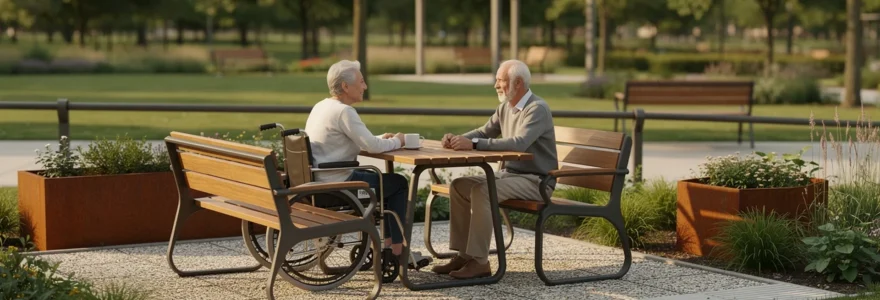
Well-designed park furniture does far more than provide somewhere to sit. It shapes how a green space is used, who feels welcome there, and how long it lasts before repair or replacement becomes necessary. Choosing outdoor furniture for parks means balancing durability against budget, accessibility against aesthetics, and sustainability against practical maintenance demands. A bench placed thoughtfully along a high street or park path can draw people in to linger and talk, creating the conditions for community life to happen. This guide works through the material choices, security considerations, accessibility standards, layout strategies and lifecycle costs that local authorities, landscape architects and park managers need to weigh up when specifying furniture for public outdoor spaces.
Material selection for durable park furniture
The material a bench, table or planter is made from determines how it performs against sun, rain, frost and heavy footfall, and how much it will cost to keep looking good over its working life. Public seating rarely enjoys the shelter of a garden or courtyard; it faces the full range of British weather, from driving rain to gale-force winds, so durability has to be weighed alongside appearance from the outset.
Powder-coated steel and cast iron benches
Metal has long been prized for its strength and sleek finish. Steel and cast iron benches offer excellent structural rigidity and resistance to vandalism, making them a common choice for high-footfall public areas. A powder-coated finish adds a protective layer that significantly extends the life of the metal, guarding against rust and corrosion far more effectively than bare metal left unprotected. This kind of low-emission coating means metal furniture can now combine durability with a considerably lower environmental cost than in the past, allowing beauty and longevity to coexist without one compromising the other.
Fsc-certified hardwood: iroko, teak and robinia
Wood brings natural, golden tones that can elevate any outdoor setting. Hardwoods such as iroko, teak and robinia are popular for park seating because they weather well and age gracefully, developing a silvery patina over time rather than degrading. Sourcing timber with FSC certification ensures it comes from responsibly managed forests, which matters increasingly in municipal procurement decisions. Interestingly, reclaimed wood sourced from old buildings, piers and other structures around the UK can offer a second life as park seating; because it was originally chosen for durability decades ago, long before international shipping made a wider range of species available, it is often naturally weather-fast and needs little more than a fresh coat of varnish to serve for years to come.
Recycled HDPE plastic lumber for weatherproof seating
Recycled plastic lumber, typically made from high-density polyethylene, has become a mainstay of modern park furniture. It resists rot, splintering and insect damage, and it does not require the periodic staining or sealing that timber does. For councils managing large estates of benches and picnic tables, this reduced maintenance burden can translate into meaningful savings over the furniture’s working life, even where the upfront cost is comparable to hardwood alternatives.
Corten steel planters and their oxidation patina
Planters and other landscaping elements complement seating by softening hard surfaces and helping visitors orient themselves as they move through a space. Corten steel is a popular choice for outdoor planters because its surface oxidises deliberately, forming a stable rust-coloured patina that protects the metal beneath from further corrosion. The result is a planter that improves with age rather than deteriorating, and one that pairs naturally with the greenery it contains.
Vandal-resistant design and Anti-Theft fixing systems
Public furniture has to withstand not just weather but wear from constant use, and in some locations, deliberate damage or theft. Specifying the right fixings and finishes from the outset reduces the likelihood of costly repairs and keeps spaces looking cared for.
Anchor bolting and Ground-Fix installation methods
Securing benches, tables and planters directly into the ground using anchor bolts is one of the most effective ways to prevent theft and unauthorised movement. Ground-fixing also improves stability, which matters for users who lean on furniture for support when sitting down or standing up. This installation method is particularly important in open, unsupervised areas such as parks and high streets, where furniture might otherwise be an easy target.
Anti-graffiti coatings and Tamper-Proof fastenings
Protective coatings that resist graffiti make cleaning far quicker and less abrasive than trying to remove paint from an untreated surface. Tamper-proof fastenings, such as security-headed bolts that require specialist tools to remove, further discourage vandalism and theft of fixtures. Together, these measures help furniture retain its appearance for longer without frequent intervention from maintenance teams.
Impact-resistant finishes for High-Footfall areas
Areas that see heavy daily use, such as town centre seating or benches near transport hubs, benefit from finishes designed to resist chips, scratches and general wear. A durable coating that can absorb knocks without flaking protects the underlying material and keeps furniture looking presentable between scheduled maintenance visits.
Universal accessibility and inclusive layout planning
Accessible design is not an optional extra in public outdoor spaces; it determines whether a park genuinely serves its whole community. Armrests and backrests built into seating offer far more than a resting point. For elderly users, those with chronic illness, and people with different physical abilities, they provide the leverage needed to lower into and rise from a seated position comfortably. Adding a backrest or armrest to a bench takes very little extra effort or cost, yet it can mean everything to the person who relies on it.
Wheelchair-accessible picnic tables and clearance zones
Picnic tables designed with wheelchair access in mind typically include an extended overhang at one end, allowing a wheelchair user to pull in alongside the table rather than being confined to the perimeter. Maintaining generous clearance zones around these tables, free from bins, bollards or planting, ensures the space remains genuinely usable rather than accessible in name only.
Sensory play equipment for neurodivergent users
Inclusive park design increasingly considers sensory needs alongside physical mobility. Equipment and quiet corners that offer varied textures, sounds and visual stimulation, or conversely, calmer retreat spaces away from noise and activity, can make a park welcoming to neurodivergent visitors who might otherwise find busy, unstructured spaces overwhelming.
Tactile paving integration around seating clusters
Tactile paving around seating areas helps visitors with visual impairments navigate safely, signalling changes in surface or the presence of furniture ahead. Integrating this paving thoughtfully into the wider layout, rather than treating it as an afterthought, keeps pathways both safe and visually coherent.
Ambulatory handrails and armrest ergonomics for elderly users
For older visitors, a well-placed handrail or a correctly proportioned armrest can be the difference between a comfortable outing and one that feels physically risky. Offering a range of seating options, some with high backs and armrests, others more open, ensures that nobody is excluded from taking part simply because the available furniture does not suit their needs.
Zoning strategies for Multi-Generational park spaces
Larger parks and green spaces work best when different areas are given distinct characters, allowing quiet contemplation, active recreation and social gathering to coexist without one intruding on the other. Just as a garden can be zoned using rugs, planters or furniture placement to mark out a seating area without erecting physical barriers, the same principle scales up effectively in public parks.
Creating quiet retreat zones with pergolas and arbours
Pergolas and arbours provide shelter from overhead sun during the day and, with the addition of soft lighting in the evening, can become genuinely inviting after dark. Positioning quieter seating near planting, walls or structures such as these creates a sense of enclosure, helping the area feel intimate and sheltered rather than exposed to the whole park.
Active recreation hubs: outdoor gyms and skate furniture
Zoning active recreation equipment, such as outdoor gym stations or skate-friendly furniture, away from quiet seating areas allows both to function without conflict. Locating these hubs near existing footfall or play areas tends to encourage use while keeping noise and activity contained to one part of the site.
Picnic and social clusters with modular table configurations
Modular table systems allow picnic and social areas to be reconfigured as group sizes change, from single tables for small families to linked clusters for larger gatherings or events. This flexibility makes the most of the available space and avoids the underuse that comes from fixed, oversized installations.
Sustainability credentials in municipal furniture procurement
Sustainability has moved from a nice-to-have to a core requirement in municipal procurement, driven both by environmental responsibility and by long-term cost considerations.
Cradle-to-cradle certification and circular economy principles
Furniture designed with circular economy principles in mind considers what happens to materials at the end of their working life, favouring components that can be recycled, repurposed or safely returned to the environment rather than sent to landfill. Reclaimed timber, repurposed from old buildings and structures into new seating, is a practical example of this thinking already in use in outdoor furnishing.
Solar-integrated benches and smart charging stations
Benches fitted with solar panels and charging points add functional value to public seating, giving visitors somewhere to top up a phone while they rest. These installations also demonstrate a park’s commitment to renewable energy in a visible, everyday way.
Rainwater-permeable bases and SUDS-Compatible foundations
Foundations designed to work with sustainable drainage systems (SUDS) allow rainwater to permeate the ground beneath furniture rather than contributing to surface run-off. This is particularly relevant where park furniture is installed on hard landscaping, helping manage water sustainably across the wider site.
Maintenance protocols and lifecycle cost management
The true cost of park furniture is rarely just the purchase price. Ongoing inspection, treatment and eventual replacement all factor into whether a piece of furniture represents good value over its lifetime.
Scheduled inspection regimes under BS EN 1176 standards
Regular, scheduled inspections help catch wear, loose fixings or emerging safety issues before they become hazards. Following recognised standards for outdoor and play equipment ensures inspections are consistent and defensible, which matters both for user safety and for local authority liability.
Re-coating and timber treatment cycles
Metal furniture benefits from periodic re-coating to maintain its protective finish against rust, while timber requires treatment cycles, such as re-oiling or varnishing, to preserve its weather resistance and appearance. Planning these cycles in advance, rather than reacting to visible deterioration, keeps furniture performing well for longer.
Budgeting for total cost of ownership in local authority contracts
When comparing furniture options, it helps to look beyond the initial purchase price and consider the total cost of ownership across the expected lifespan.
| Material | Typical Maintenance Need | Relative Longevity |
|---|---|---|
| Powder-coated steel | Periodic re-coating to prevent rust | High, with proper coating upkeep |
| FSC-certified hardwood | Regular oiling or varnishing | High, ages gracefully if treated |
| Recycled HDPE plastic | Minimal; occasional cleaning | Very high, resists rot and insects |
| Corten steel | Low; oxidation is self-protective | High once patina stabilises |
Factoring inspection schedules, re-coating cycles and eventual replacement into contract budgets from the outset gives local authorities a far more accurate picture of value than upfront price alone, and supports better-informed decisions when specifying furniture for the next generation of welcoming, well-used green spaces.